大同是第一批国家历史文化名城。北魏与辽金的厚重历史在此写就,留下云冈石窟、应县木塔、善化寺等杰作。近代,大同迅速成为中国北方重要的能源基地,辉煌的历史文化遗产一度被尘封。2008年以来,“一轴双城”格局的提出,揭开了古城文化复兴的序幕,历史名城的光彩正在重新显现与焕发。
既下山·大同的建造便处于这一历史进程之中。酒店所处的东南邑历史文化街区,以“活态传承”为引领,更关注于微观层面的内容和运营,目标是打造一个大同的文化会客厅和城市目的地。既下山·大同的建设与东南邑的成形,乃至整个古城的再生相伴相生。goa大象设计作为酒店的建筑设计方,与既下山携手走过五年,参与了酒店实现的全过程。
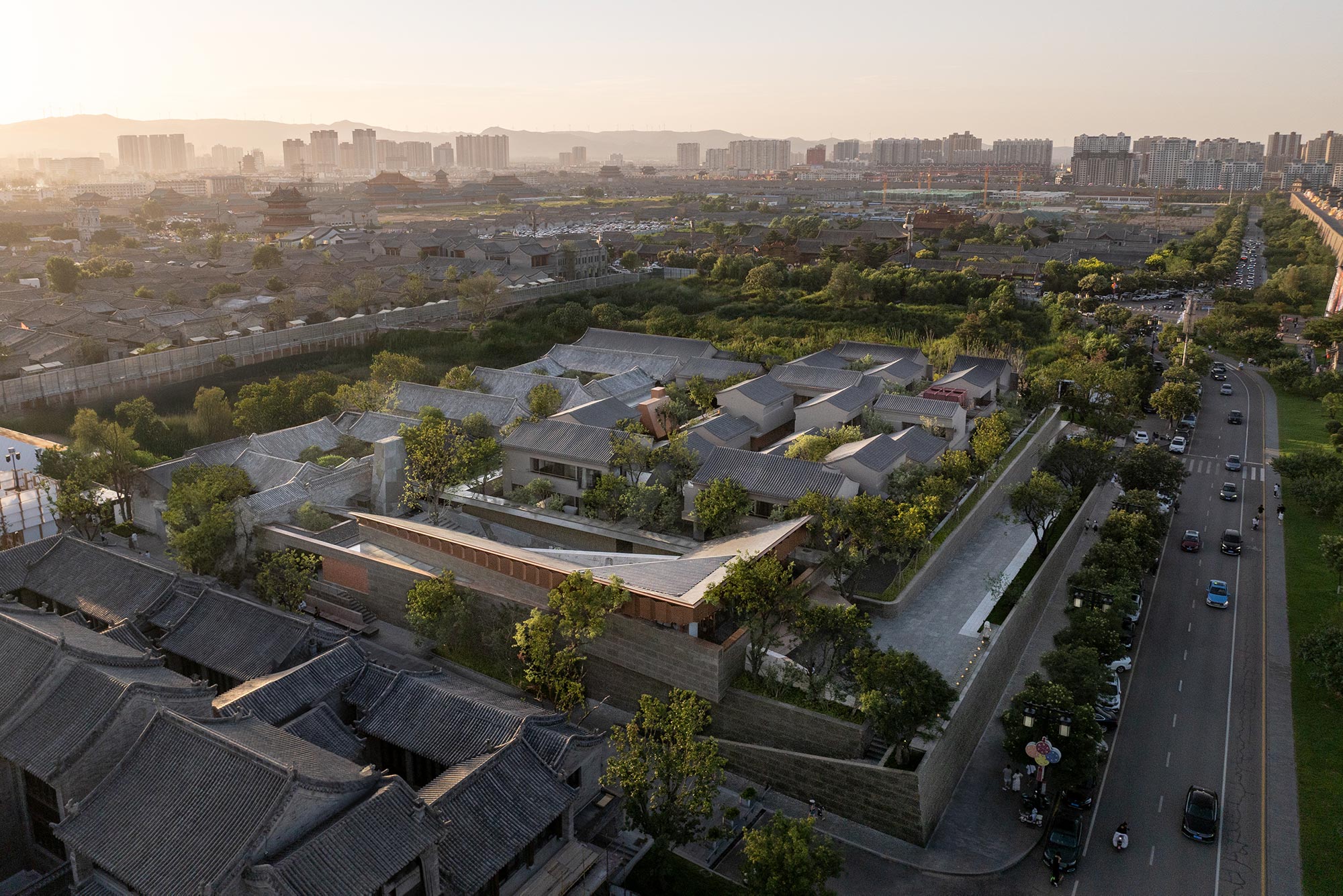
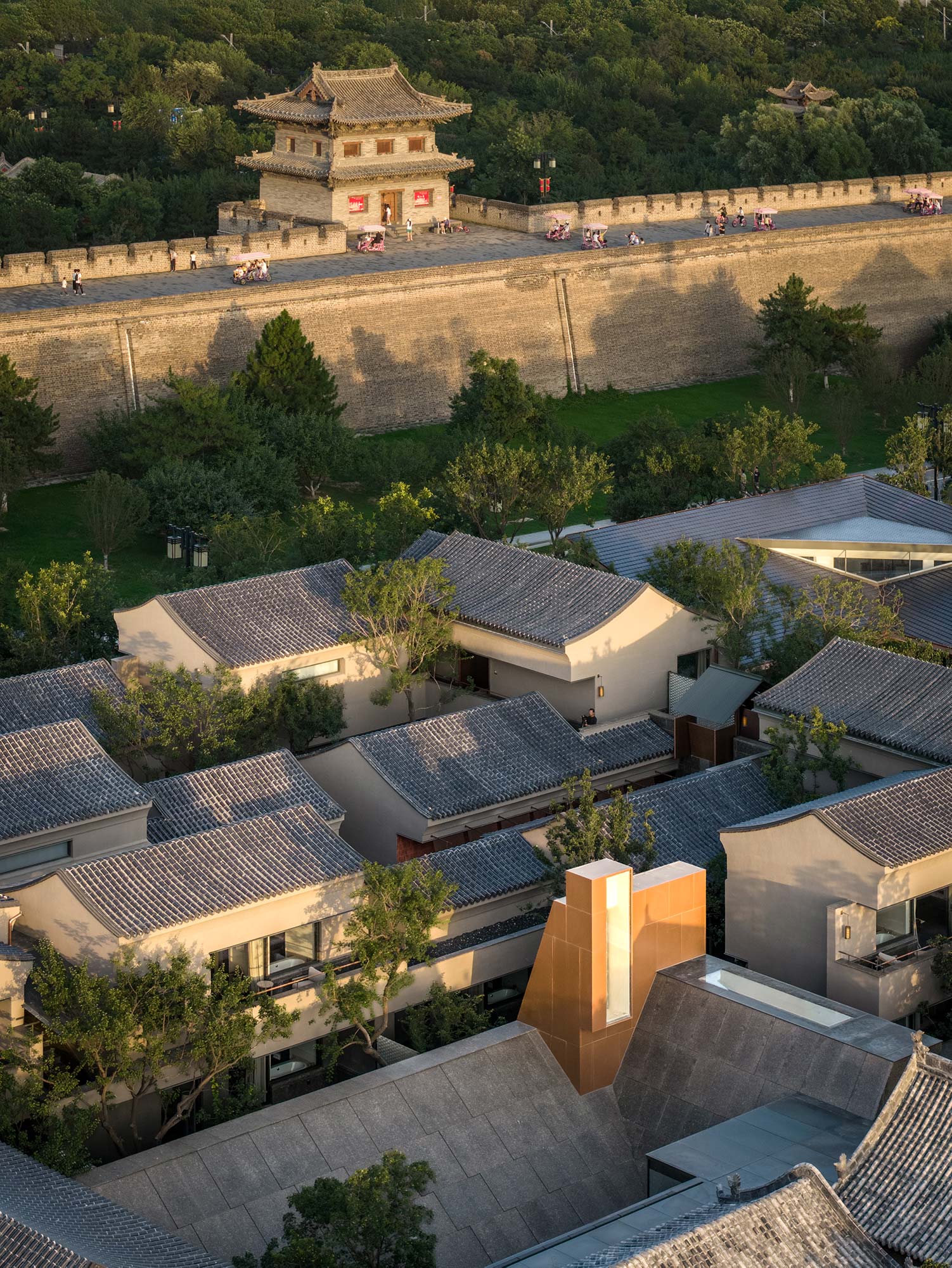
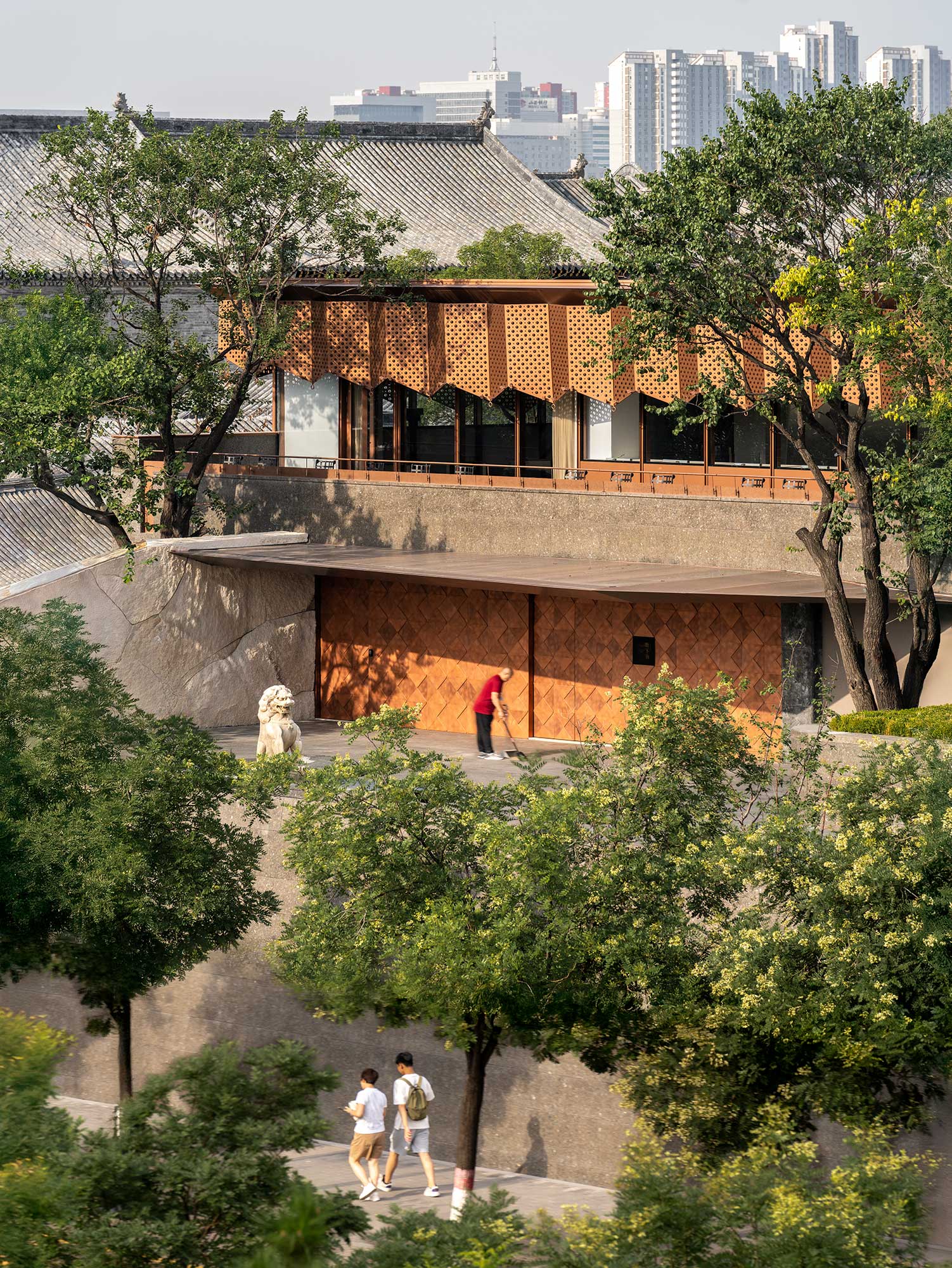
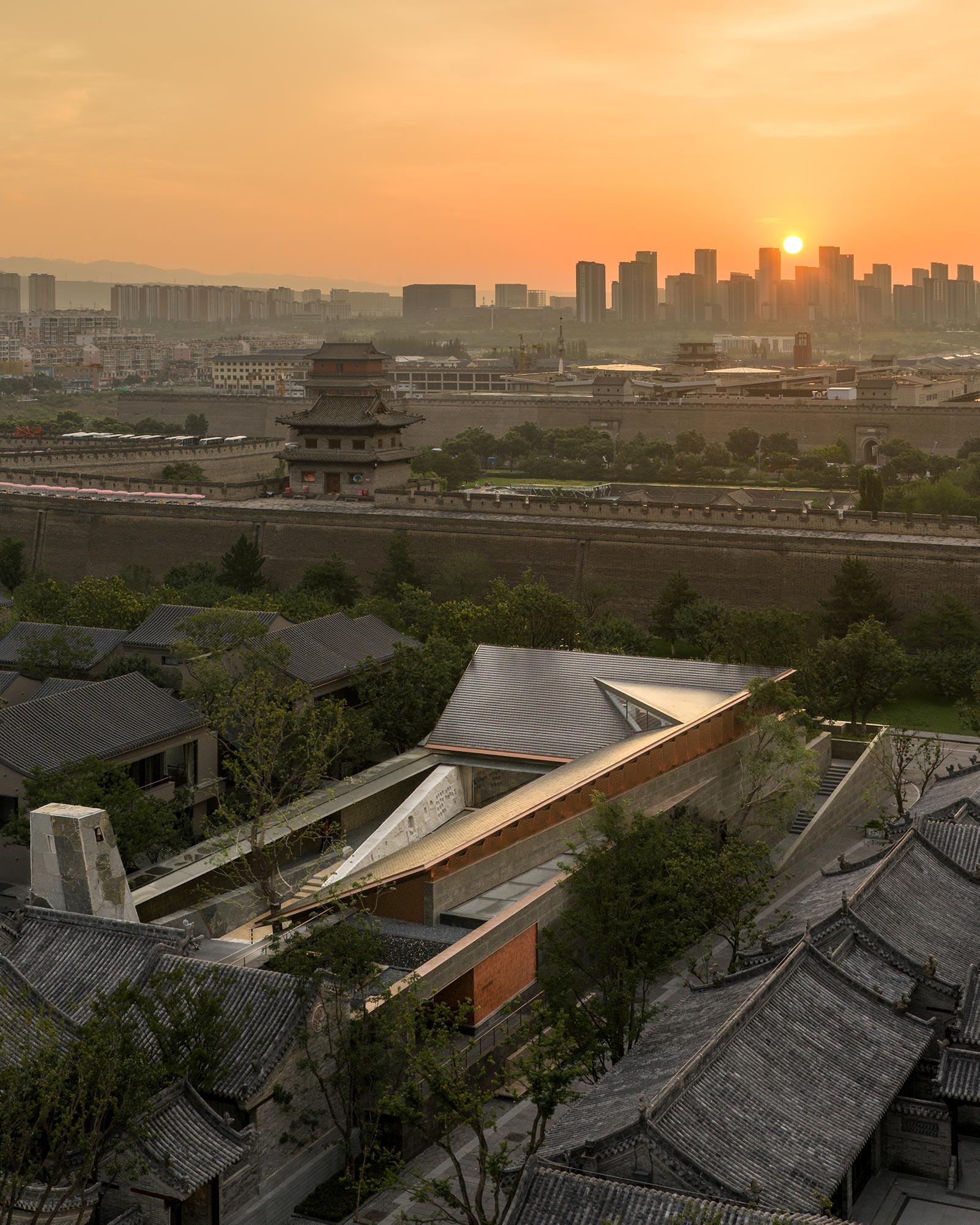
2019年,当酒店最初立项时,在古城蒙尘的表象之下,“四大街、八小巷,七十二条绵绵巷”的棋盘式街巷格局清晰可见,诉说着大同作为中国古代“里坊制”成型之城的历史。在这样的条件下,既下山·大同面对着两个方面的使命:既是为旅客提供体验的场所,也是古城中重要的城市建筑。设计之初,建筑师明确主张:“对于古城肌理,应充分尊重,而非对抗。” 因此,酒店的建筑形态不与相邻街区做雕塑性竞争,而是完全融入古城格局之中,在里坊群落的尺度控制下,寻求内部空间的丰富变化。
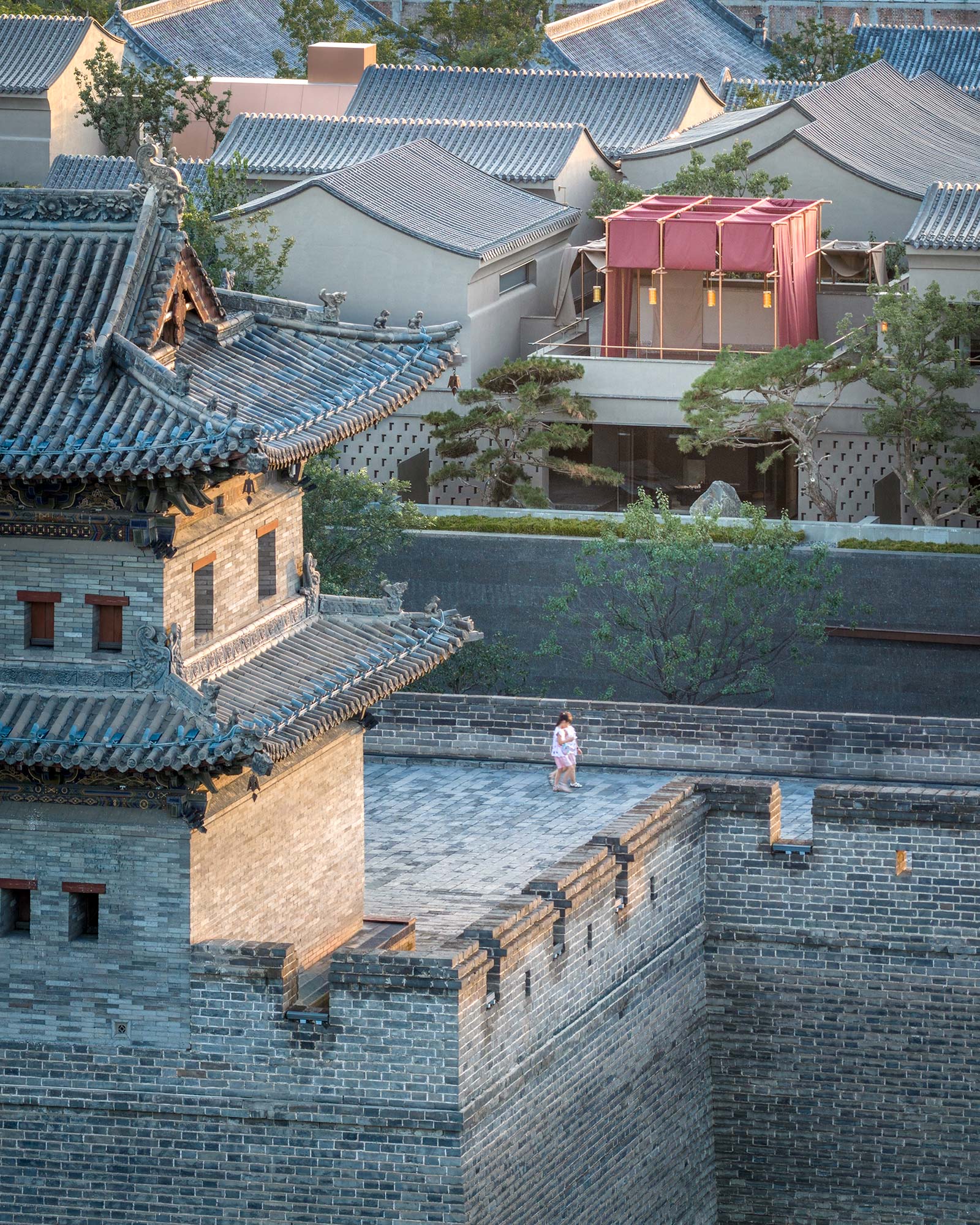
大同拥有长达2300年的厚重历史,作为“三代京华、两朝重镇”,融汇了西域文化、佛教文化与边塞文化。完全以仿古方式复建一座明清院落,并非良策。若新建筑过度模仿古旧风格,反而会使老建筑失去其独特身份。最终的设计从民居、地景、气候三个关键词出发,用“古韵新生”的方式,构筑一个能与打通2300年历史对话的文化场域。
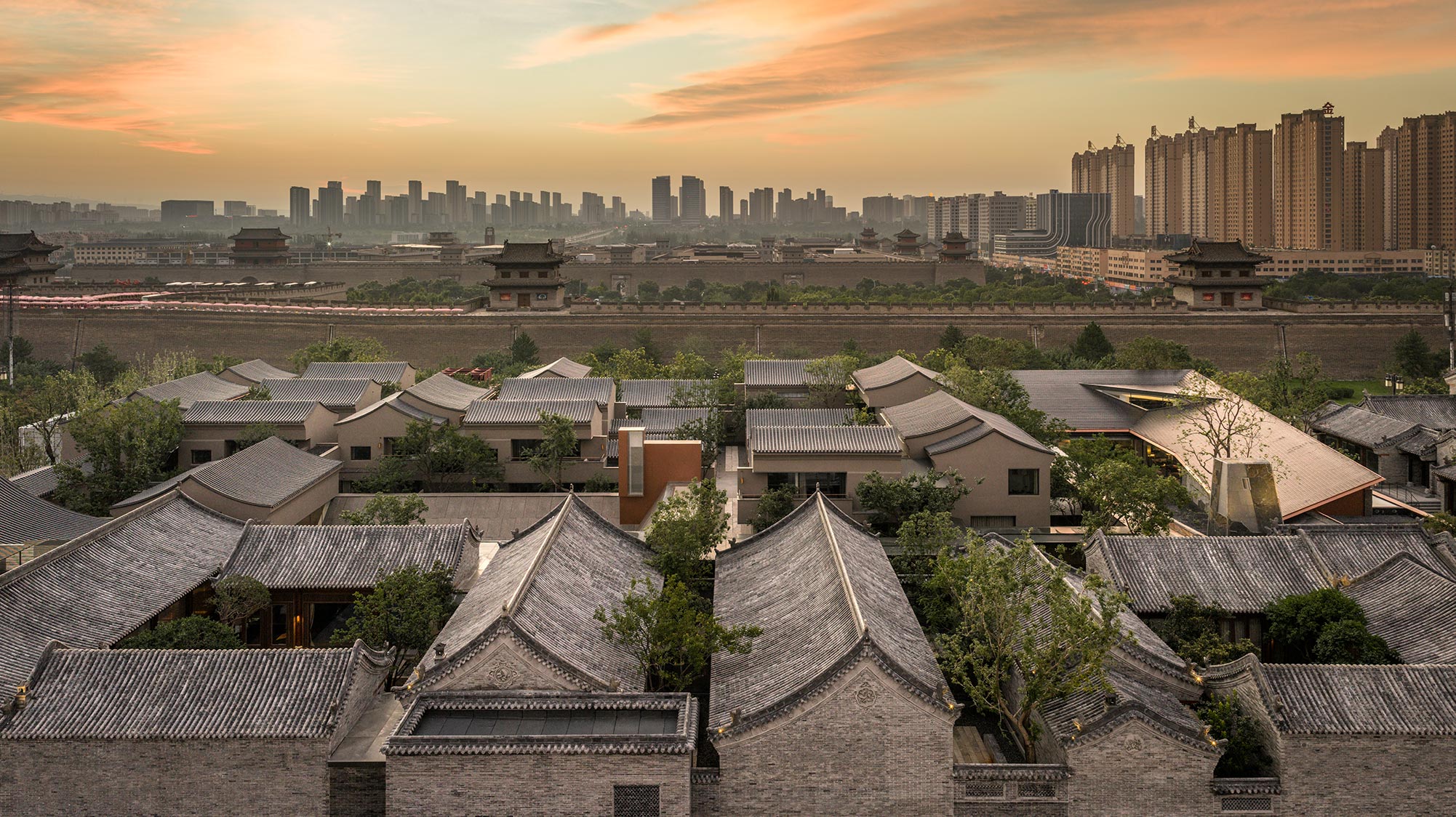
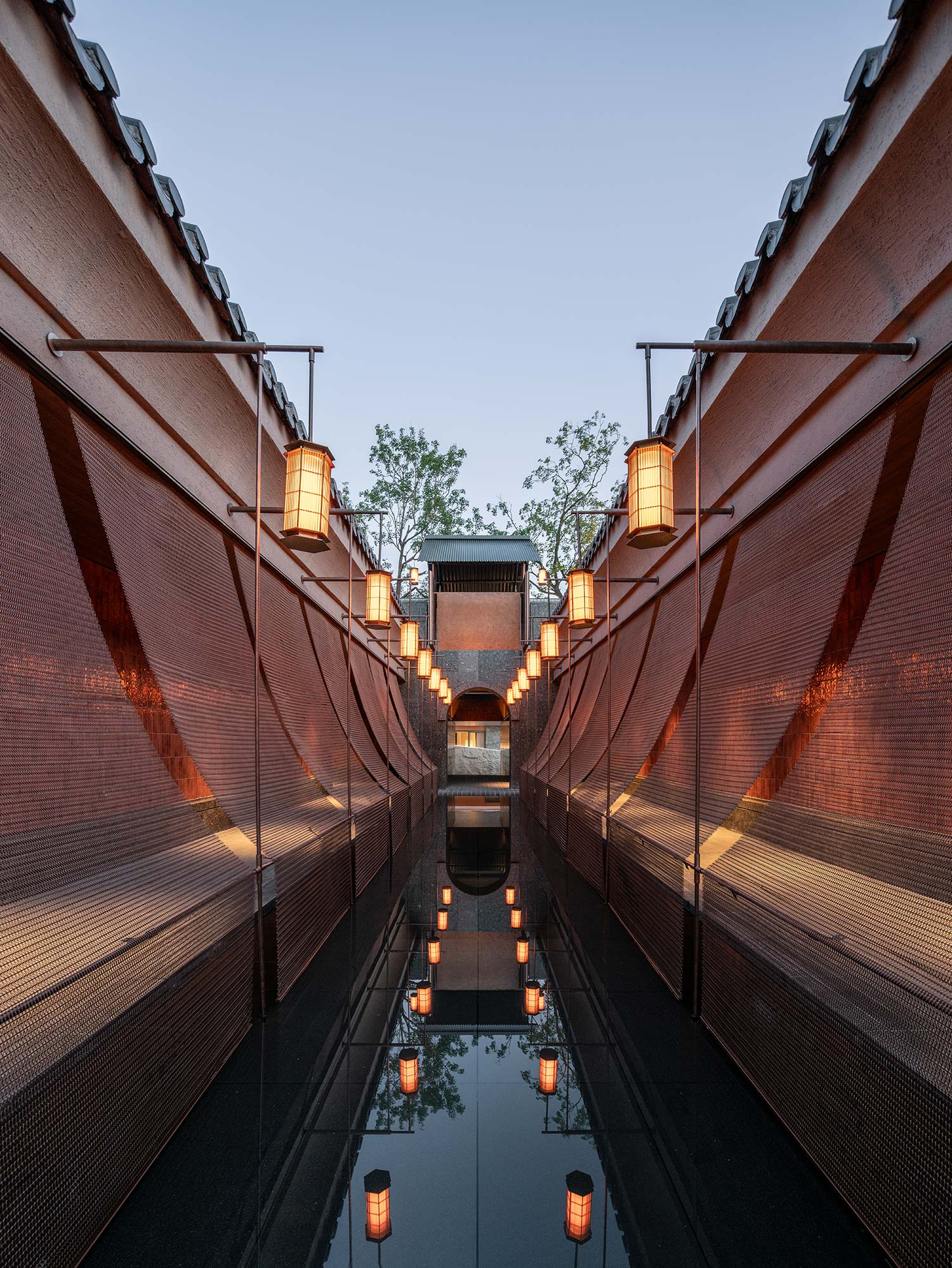
· 民居:设计提取山西大院“外雄内秀、五进穿堂、庭院深深、深藏不露”的内在特征,转译为当代表达。
· 地景:设计对石窟这一大地艺术的致敬,大堂区域,建筑的平面在严整的方正格网中变奏,斜切的单坡屋顶,既呼应场地边界的原始斜线,也强化建筑的雕塑感和几何感。
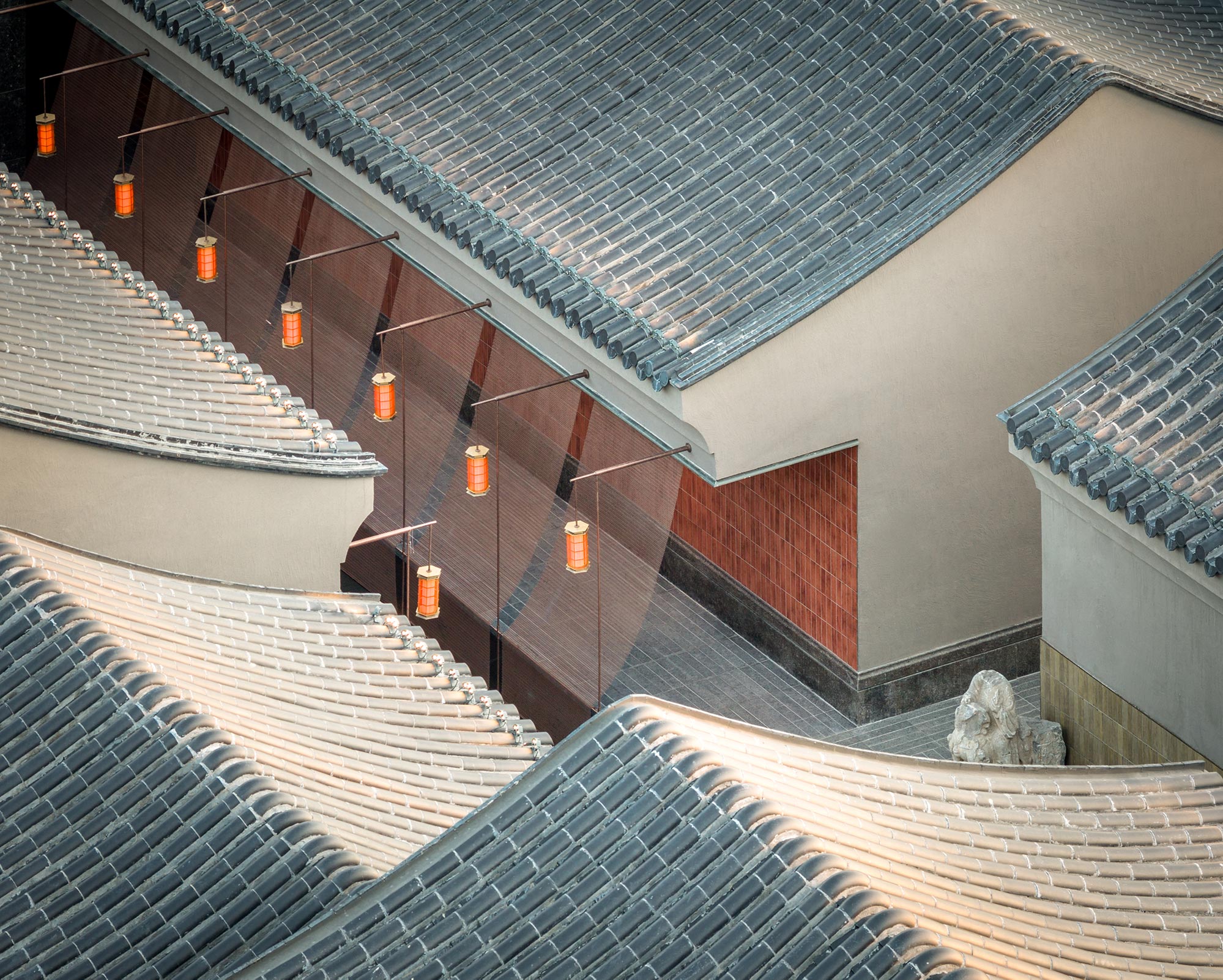
· 气候:大同“光烈影锐,澄明爽廓”,利用不同材料的着光性与色彩,为空间创造光的氛围。
As one of the first nationally recognized historical and cultural cities, Datong is imbued with the profound history of the Northern Wei, Liao, and Jin dynasties, leaving behind masterpieces such as the Yungang Grottoes, Yingxian Wooden Pagoda, and Shanhua Temple. In modern times, Datong rapidly evolved into a vital energy base in northern China, during which its glorious historical and cultural heritage was once overshadowed. Since 2008, the proposal of the "One Axis, Twin Cities" framework marked the beginning of the cultural revival of the ancient city, allowing the splendor of this historic city to reemerge and flourish.
The construction of JISHANXIANG · Datong unfolded amidst this historical process. Located within the Southeast Yi Historical and Cultural Block, which is guided by the principle of "living heritage," the project places greater emphasis on micro-level content and operational aspects, aiming to transform the area into a cultural salon and urban destination for Datong. The development of JISHANXIANG · Datong is intrinsically linked to the formation of the Southeast Yi Block and the broader regeneration of the ancient city. As the architectural design firm for the hotel, GOA partnered with JISHANXIANG over five years, participating in the entire journey of realizing the hotel.
In 2019, when the hotel was first proposed, beneath the dust-covered façade of the ancient city, the clear chessboard-like street layout of "four main streets, eight lanes, and seventy-two alleyways" remained visible, narrating the history of Datong as a city that shaped the ancient Chinese "lifang" (neighborhood) system. Under such conditions, JISHANXIANG · Datong faced a dual mission: to serve as a space for visitor experiences and to function as a significant urban architectural landmark within the ancient city. From the outset, the architects firmly advocated: "The texture of the ancient city should be fully respected, not opposed." Thus, the hotel's architectural form does not compete sculpturally with adjacent blocks but instead fully integrates into the ancient city's fabric, seeking rich variations in interior spaces within the scale constraints of the lifang clusters.
With a profound history spanning 2,300 years, Datong served as "the capital of three dynasties and a strategic stronghold of two," blending cultures from the Western Regions, Buddhism, and the frontier. Merely reconstructing a Ming or Qing courtyard in a purely antiquated style would not be ideal. If new architecture excessively mimics ancient styles, it risks diluting the unique identity of the old structures. The final design draws inspiration from three key themes—vernacular dwellings, landscape, and climate—to create a cultural space that converses with Datong's 2,300-year history through "renewal with ancient charm."
· Vernacular Dwellings: The design extracts the intrinsic characteristics of Shanxi courtyards—"robust exterior with delicate interior, five-sectioned halls, deep courtyards, and concealed elegance"—and translates them into a contemporary expression.
· Landscape: The design pays homage to the grottoes as a form of earth art. In the lobby area, the building's layout introduces variations within a strict orthogonal grid. The slanted mono-pitched roof not only responds to the original diagonal boundaries of the site but also enhances the sculptural and geometric quality of the architecture.
· Climate: Datong is known for its "intense light, sharp shadows, clarity, and openness." By leveraging the light-reflecting properties and colors of different materials, the design creates an atmospheric interplay of light within the spaces.
业主 Client
华夏江鸿(大同)文化旅游开发有限公司 Huaxia jianghong (Datong) Cultural
所在地址 Location
山西省大同市 Datong, Shanxi
建筑规模 GFA
9,800㎡ 9,800㎡
项目类型 Type
度假&休闲 For Leisure
设计范围 Design scope
建筑 Architectural
设计周期 Design period
2021 - 2025